Casinos Without GamStop in 2026: What an Offshore App Really Promises
 Available in GB
Casinos without GamStop are offshore operators with no Gambling Commission licence. They sit outside the national self-exclusion scheme, so a GamStop block does not stop a sign-up there. Nothing about them is illegal for the player; everything about them is unregulated for the player. No UK licence, no UK protection, no UK redress.

The promise of a casino without GamStop is speed: an account in two taps on a phone, a card or a crypto wallet, no document upload, a bonus that looks like a head start. The reality arrives later, usually at the withdrawal button, on a small screen, at an hour when nobody is answering. That gap is the whole subject of this page, and it is worth describing carefully rather than dramatically, because the offshore market is now big enough to be measured and old enough to be checked.
I have spent years reading licence registers, terms and conditions and the Gambling Commission’s enforcement notes, and the pattern is stable: a site without a British licence is not automatically a swindle, but it is a site where the protections that make British gambling dull are simply absent, and where the only thing standing between a player and a refused payout is the operator’s own goodwill. On a phone, where terms are four taps deep and nothing prints, that goodwill is doing more work than most people realise.
First, the plain facts, because they do not change with the marketing. An offshore casino is not licensed in Great Britain. It holds a licence from Curaçao, Anjouan, Kahnawà:ke or somewhere with no regime at all, and that licence has no standing with the Gambling Commission. UK protections do not apply: no GamStop block, no Financial Ombudsman, no statutory eight-week complaints clock, no right to take a dispute to an approved alternative dispute resolution provider, and no licence condition stopping an operator from writing an unfair term into the small print. If something goes wrong, there is no British route to put it right. Anyone who wants help with their own gambling can call the National Gambling Helpline, run by GamCare, free on 0808 8020 133, 24 hours a day, every day of the year; in Wales the number given is 0808 2819 265. That line and the rest of the support network come up again at the end of this page.
One small point about the name before we go further: the scheme is GamStop, and it is often typed “gamestop” because the word game suggests itself. It is the same scheme either way.
What Casino Sites Without GamStop Are Actually Outside Of
A casino site without GamStop is outside one rule, and the rest of the UK rulebook leaves with it.
The self-exclusion scheme itself is straightforward. GamStop Online blocks a person from signing up for or using online accounts with gambling companies licensed in Great Britain, with a choice of six months, one year, five years or five years with auto-renewal. Signing up takes a few minutes; the block can take up to 24 hours to take effect. Once registered, it cannot be cancelled or deactivated during the term, and it stays in place after the chosen period ends unless the person contacts GamStop to remove it. Miss that step and the scheme holds the data through a further automatic seven-year period during which operators are told the person was previously excluded. That is a fact about the scheme, stated plainly, and it applies whoever the person is. Offshore sites are not a way round it in any sense that helps: an offshore site that accepts a self-excluded player does not restore their access to British-licensed gambling, and it does not unwind the term.
The requirement to join the scheme sits in the Licence Conditions and Codes of Practice, social responsibility code provision 3.5.5, which states that licensees must participate in the national multi-operator self-exclusion scheme. It has applied to all online operators since 31 March 2020. In April 2020 the Commission added a duty to check the entire customer base for GamStop registration at least every 24 hours, which also stopped registered people receiving direct marketing. Operators that missed the original deadline did not argue: on 3 April 2020 the Commission suspended the licences of two online operators, one licensee and Sportito, under section 118(2) of the Gambling Act 2005.
Offshore sites fall outside that entirely. GamStop’s own position is that it blocks access to gambling websites and apps licensed in Great Britain only, and that it cannot prevent access to services run by organisations that do not participate in the scheme. The scheme’s obligations apply only to Gambling Commission licensees, so a site with no British licence is not connected to it.
What else leaves with the licence is easier to see on a phone than in an argument. Credit cards cannot be used for gambling with a British-licensed operator, and no offshore operator is bound by that ban, which is why an offshore app will happily take a card a bank block was meant to stop. British-licensed sites must prompt a customer to set a financial limit before the first deposit, must offer limits in a free-text box at account level, and must remind customers every six months to review their account and transaction information. There is no such obligation offshore. There is also no approved dispute route. The Commission is a regulator, not an ombudsman: it cannot resolve individual complaints or get anyone’s money back, and it deals with licence holders, which an offshore operator is not.
The Scale of Illegal Gambling Sites
The one number I would put beside the word “casinos without GamStop” is a Gambling Commission figure: over the monitored period from May 2024 to July 2025, just over 1,000 unique illegal gambling websites were accessed by consumers in Great Britain. That is not a claim from a trade body or a campaign group. It is the regulator’s own count of sites that have no business taking British customers at all.
The number grew as the method got better. Sites identified through the Commission’s affiliate-page method rose from 364 in May 2024 to 535 in July 2025, with crypto-casino search terms added to the methodology in December 2024. Meanwhile the Commission’s disruption work scaled accordingly. In the quarter January to March 2026 it referred 226 websites to search engines and issued 98 cease and desist notices to illegal operators. Between April and June 2026 it referred 366 websites, covering 147,721 URLs, and in July to September 2026 it referred 1,835 websites covering 7,677,211 URLs and issued 546 cease and desist notices. Since April 2024 it has issued 3,140 cease and desist and disruption notices in total — 2,032 cease and desists, 774 registrar referrals, 402 host referrals and 3 payment provider referrals — and secured 287,961 URL removals out of 447,778 URLs referred to Google and Bing.
Engagement does not vanish when the enforcement ramps up. Across 160 illegal gambling websites for which traffic data existed, there was an average 32 per cent decrease in engagement after disruption. The method matters more than the push: registrar blocks and website suspensions each produced an average 91 per cent fall in engagement, ahead of GEO IP blocking at 60 per cent, Bing removal at 52 per cent, Google removal at 30 per cent and Facebook removal at 8 per cent. Search-engine removal makes a site harder to find, but it does not close the door. That is the honest shape of the thing: a thousand-odd sites, several hundred disruptions a quarter, and a regulator that says plainly that blocking works better than de-listing.
How many people are actually there is a separate and much smaller question, and it is worth holding both numbers at once. The Commission’s analysis published on 5 November 2026 estimates that, across the whole adult population including non-gamblers, 0.6 per cent of respondents engaged with illegal gambling websites in the past four weeks and a further 0.4 per cent in the past twelve months, while 94.4 per cent showed no indication of using one. Among those who had gambled online in the past four weeks, 2.5 per cent had engaged with an illegal site, with an additional 1.5 per cent in the past year. Market estimates run hotter — H2 Gambling Capital put stakes with illegal operators at £16.6 billion in 2025, up from about £5 billion in 2019 — but those depend heavily on assumptions about what a blocked player does next, and the Commission’s own methodology notes that it cannot see activity hidden by VPNs.
Bonus Terms Build in the Delay
Where the offshore offer is a casino without GamStop, the bonus is the product, and the terms are where the delay is built in.
Start with the contrast. Since 19 January 2026, British-licensed operators cannot apply wagering requirements above ten times, and cannot include more than one type of gambling product within a single incentive. The Commission chose that cap over an outright ban after consultation, reasoning that licensees would otherwise be likely to write terms preventing customers cashing out bonuses, and noting that the cap “will take out extreme levels as some licensees currently apply up to 60 times wagering requirements”. By offshore standards that cap is not strict. Published terms at one offshore operator describe casino bonuses subject to a 25× playthrough requirement before winnings derived from them may be withdrawn, expressed either as a multiple of the bonus or of the bonus plus deposit, with a time limit attached. Offshore welcome-bonus multipliers are commonly quoted at 35× to 50×, and no-deposit bonuses at 40× to 60× with a cashout cap of €50 to €100.
Then come the two clauses that quietly decide whether the bonus is worth anything. A maximum cashout clause caps what can be withdrawn from bonus winnings — one offshore operator reserves the right to limit withdrawals from bonus-generated winnings to 300 per cent of the credited bonus amount, voiding the excess. A maximum bet clause caps stakes while wagering is running: the same operator sets that at €5 for regular players and €10 for VIP players and rejects any bet above it, while another makes the cap 20 per cent of the deposited amount and states that breaking it may result in account closure and forfeiture of the bonus and winnings generated while wagering it. In the UK, maximum limits on withdrawing a deposit balance are not permitted at all, and terms that give the operator sole discretion to void winnings are treated as unfair. Offshore, both are ordinary drafting.
Two more terms matter, and they matter more on a phone, where the terms page is long and nobody scrolls to the end. A deposit made while a no-deposit bonus is active can leave the no-deposit terms — including its wagering requirement and cashout cap — governing the whole balance. And “bonus abuse” clauses are broad: low-margin or zero-risk bets, moving from a low-weighted game to a high-weighted one after a big win, and delaying free spins until wagering is met are all listed as prohibited play by at least one operator, with confiscation and account closure as the sanction.
Then there is the payout itself. British-licensed operators have been banned from offering reverse withdrawals since RTS requirement 14B came into force on 31 October 2021, which states that consumers must not be given the option to cancel their withdrawal request. Offshore, the cancel button frequently survives, and it is the single most expensive piece of interface design in gambling: a pending withdrawal that can be reversed is a withdrawal that often is not made.
How the First Check Works, and the Tenth
The one thing the offshore question turns on is identity verification, and it is worth walking through because the difference between a first withdrawal and a fifth is where players get caught.
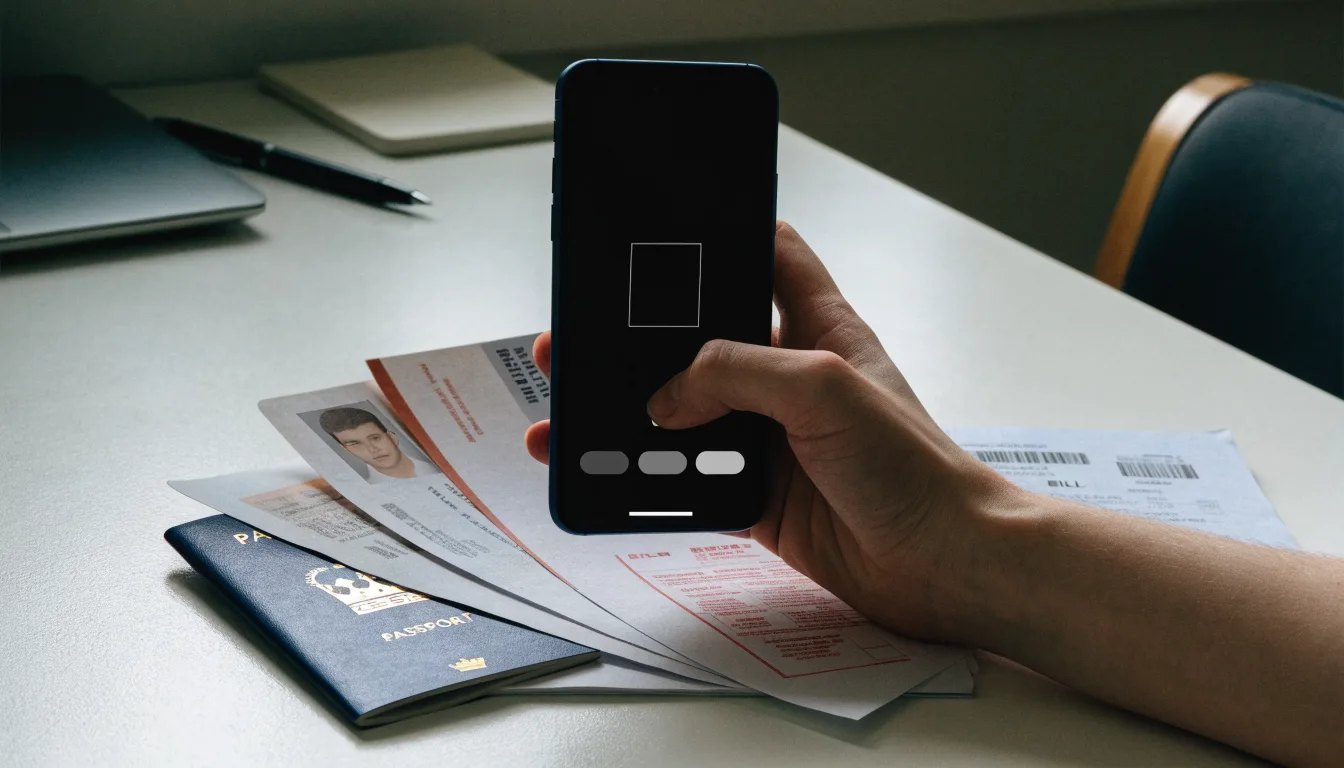
On a British-licensed site, the law now pushes verification forward. Licence Condition 17 requires a licensee to obtain and verify information establishing a customer’s identity before that customer is permitted to gamble, and the Commission expects identity and age checks before a deposit or a stake rather than at the point of withdrawal. Companies can often do that by matching an account against credit reference agencies and the electoral roll, in which case no documents are needed and the process is effectively instant. Where that fails, a passport, driving licence or household bill may be requested. The Commission says it cannot give a timescale for identity checks because the length varies, and that where a business delays a withdrawal for insufficient identification it may be in breach of Licence Condition 17 and face regulatory action. Licence Condition 17.1.1 goes further: a withdrawal request must not trigger a demand for extra information the licensee could reasonably have requested earlier, subject to obligations it must meet at that point anyway, such as anti-money-laundering rules. Under the money-laundering regulations, a remote casino must identify and verify a customer depositing or withdrawing €2,000 or more, whether in one transaction or in linked ones. Over a quarter of complaints reaching the Commission’s Contact Centre concern identity verification, precisely because people are asked for documents only when they try to withdraw.
Offshore, none of that applies and the sequencing is the operator’s commercial choice. A first withdrawal on a new offshore account can be frictionless — small, carded back, no documents, sometimes within hours. The tenth can be the one that stops. By then the balance is larger, the account has a history, and a request arrives for a passport, a selfie, a bank statement, proof of address and, at a higher balance, source-of-funds documents explaining an irregular income pattern. In the UK the CMA’s position, which the Commission says applies to all online operators, is that consumers are legally entitled to deposited money, winnings from money deposited and gambled, and bonus winnings where conditions are met; British-licensed operators may not confiscate or deduct any part of a deposit balance merely because a customer has failed identity or age verification. Offshore there is no such rule, and no approved adjudicator to appeal to if the documents are “not acceptable”.
The warning signs are consistent. Verification demanded for the first time at withdrawal. A requested document list that grows each time it is answered. A selfie or video check on an established account. A term reserving the right to close an account and void winnings at the operator’s discretion. And a withdrawal that sits in “pending” with a cancel option beside it, which is not a verification delay at all but an invitation.
Five Signs an Offshore Casino Is Worth the Risk
None of this is an argument that every offshore site is a con. It is an argument for checking five things before a deposit rather than after a dispute, and each of them can be checked in a few minutes on a phone.
The Licence Register Actually Names the Domain
A licence is only worth the register entry behind it. Curaçao’s National Ordinance on Games of Chance took effect on 24 December 2024 and replaced the old master-licence and sub-licence model with direct licensing by the Curaçao Gaming Authority; the legacy “orange” sub-licence certificates of operation ended on 15 October 2025, and a historic /JAZ number or legacy seal must not be treated as independent proof of a current licence. The four former master licensors stopped licensing on separate dates — Gaming Curaçao (365/JAZ) on 18 August 2024, Curaçao eGaming (1668/JAZ) on 1 October 2024, one licensee on 1 November 2024 and Curaçao Interactive Licensing (5536/JAZ) on 31 January 2025. One practical wrinkle: the CGA announced on 7 October 2026 that its previous online gaming portal would not return to service and that it is building an alternative mechanism for verifying licensed domains, so a site quoting a CGA licence at the moment may have no working seal to click.
The check: find the licence number and the regulator’s own register, and confirm that the domain in front of you is named in the entry. Where a seal exists, clicking a CGA Certificate of Operation seal must redirect to cert.cga.cw, and if the certificate behind it shows a different domain name the site is displaying someone else’s certificate. Anjouan certificates carry a unique licence number and a QR code linking to the public register; one that cannot be verified there should not be relied on. Kahnawà:ke runs a Logo Certificate Program that generates a Certificate of Good Standing for a site holding a valid permit. And the smallest check of all costs nothing: the Gambling Commission advises consumers to click through to its public register and see whether the site’s activities and domain names match. A regulator’s register is a checklist, not a character reference.
The Fee Schedule Matches the Size of the Business
Licence fees are a rough proxy for how much supervision exists. Curaçao’s total annual B2C fee is EUR 47,450 — a EUR 24,490 licence fee to the National Treasury and a EUR 22,960 supervisory fee to the CGA, payable in full by 15 January — with a one-time non-refundable application fee of EUR 4,592. Anjouan’s published schedule is EUR 17,828 for B2C licence issuance and EUR 17,828 for annual renewal, with EUR 500 per additional domain. Kahnawà:ke charges an annual Client Provider Authorization fee of USD 20,000, with the application fee rising from USD 35,000 to USD 40,000 on 1 January 2027. Malta sits well above all of these: a one-time EUR 5,000 application fee, a EUR 25,000 annual licence fee, gaming tax at 5 per cent of gaming revenue and minimum paid-up share capital of EUR 100,000 for the main B2C licence types.
The check: find the fee schedule for whatever licence the site claims and read what it costs to hold it. Costa Rica is the cautionary case — it operates no comprehensive gambling licensing regime, and the “data processing license” sometimes referenced in the industry is not a licence in the strict legal sense. Its Legislative Assembly rejected Bill No. 25,057 in early 2026, the bill that would have introduced a mandatory licensing regime.
Player Funds Are Segregated and Described as Such
Segregation of player funds is the difference between an operator’s bad quarter and a player’s lost balance. Anjouan’s published regulatory standards require operators to segregate player funds from operational funds, to use random number generators certified by an approved independent testing facility, and to implement anti-money-laundering and age-verification controls. Under British rules, customer funds must be held in a separate client account, and an operator must select one of three protection ratings — “not protected”, “medium protection” or “high protection” — state which applies in its terms, and, if rated not protected, remind the customer every six months that their funds are not protected in the event of insolvency.
The check: read the terms for the words “segregated” or “client account” and for a stated insolvency rating, and notice whether the operator says anything at all. Be clear about what segregation is worth: keeping customer funds in a separate account does not mean customers get their money back if the operator becomes insolvent, and gambling businesses are legally allowed to hold customers’ money in overseas bank accounts. In the UK, money staked within an open bet is not treated as customer funds and is not covered by any insolvency arrangement.
There Is a Named Complaints Route With a Clock
An offshore site without a named dispute route is a site where the only arbiter is the operator. Anjouan requires licensees to designate an authority-approved ADR provider and to list its name and contact details in player-facing terms, with operators expected to resolve complaints within 30 days before a player may escalate; the approved providers are EGIS ADR, Axion ADR, iGaming ADR and one licensee. Kahnawà:ke requires a licensee’s relationship with players to be contractual and free of terms that are unfair or unreasonable, and employs a full-time Dispute Resolution Officer. Malta asks players to lodge complaints through a form it reviews in English or Maltese and recommends resolving the dispute with the operator first.
The check: find the disputes clause, and see whether it names a body, an email address and a deadline, or merely promises to look into it. For scale, British-licensed operators must let customers refer a dispute to an approved ADR entity free of charge if it is unresolved after eight weeks, and the providers that historically handle most gambling disputes are IBAS and eCOGRA. Their published numbers are sobering for anyone expecting an easy win: eCOGRA’s report for 1 October 2024 to 30 September 2025 records 911 disputes received, of which “Deposits & Withdrawals” accounted for 150 valid disputes, an average 31 days to resolve domestic disputes, and 17.8 per cent of completed disputes ruled in favour of the consumer. IBAS’s report for the same period records 3,721 domestic disputes and a 20-day average completion time. Those are figures from a regulated regime with an ombudsman-shaped safety net. Offshore, the same dispute exists without the net.
Payments Arrive by a Method With a Paper Trail
Payment choice decides how much evidence exists afterwards. Crypto is fast and cheap, and it is also the option that leaves the least recourse: a Bitcoin transaction is only treated as settled at six blocks deep by the classic client and by most merchants bearing double-spend risk, which at a 10-minute target block time is roughly an hour, though where the loss from a double spend is negligible a payment can be accepted as soon as it is seen. TRON-based USDT is quicker and mostly cheaper, but a transfer to a new wallet consumes about 130,000 Energy against roughly 65,000 to a funded one, and where an account lacks Energy, TRX is burned to complete the transfer or the transaction fails outright.
Card and bank rails leave a trail a bank can be asked to look at, and the pricing is knowable. Visa Direct’s Fast Funds service processes in real time with funds available within 30 minutes of approval. Faster Payments has a £1 million scheme ceiling, though individual banks set lower per-payment limits, and over 90 per cent of transactions complete in under two seconds. E-wallet costs are published too: Skrill and Neteller both charge 2.80 per cent of the amount withdrawn to a bank account, with a minimum of EUR 3.50 and USD 3.50 respectively, effective 12 January 2026, and both apply a 4.49 per cent foreign-exchange fee where conversion is needed.
The check: look at both ends of the rail — what the operator says it charges, and what the wallet or chain charges — and prefer the method whose records someone else holds. That is also why British-licensed operators must now accept payment from Great Britain customers only by a method whose provider is a payment service provider within the Payment Services Regulations 2017: it is a paper-trail rule dressed as a payments rule.
How to Check an Offshore Casino Before You Install the App
Six steps, each with its reason, all of them ordinary and lawful. None of them takes long on a phone.
- Look up the licence and the domain on the regulator’s register. Find the licence number in the footer, then find it in the issuing regulator’s own public register and confirm the domain you are on is named there. Reason: a licence claim is marketing until the register agrees, and legacy seals and /JAZ numbers no longer prove anything.
- Read the withdrawal section of the terms before the bonus section. Look for a maximum cashout cap, a maximum bet while wagering, a time limit on the bonus, and whether the withdrawal can be cancelled once requested. Reason: those four clauses decide whether the bonus is money or a mood, and they are the ones marketing never mentions.
- Confirm what identity documents will be asked for and when. Check the terms and any verification page for the document list and the timing. Reason: on a British-licensed site the checks are meant to happen before you gamble; offshore, verification is often first requested at withdrawal, which is the single largest source of complaint in the sector.
- Find the named ADR provider, or note that there is none. Read the complaints clause for a body, an address and a deadline. Reason: without a named route, a dispute has no destination, and no regulator will step in for an offshore account because the Commission regulates licence holders, not players’ grievances.
- Check the operator’s fund-protection wording and its payment rails. Look for “segregated” or “client account”, an insolvency rating, and whether the cash-out method leaves a record with a bank or wallet. Reason: segregation improves the odds of being paid in an insolvency without guaranteeing it, and a rail with a paper trail gives a dispute something to stand on.
- Set the outside protection up before you need it. Install blocking software — GamStop signposts Gamban and BetBlocker for phones, tablets and computers — and check whether your bank offers a gambling block. The Commission’s list of banks offering one, last updated on 16 October 2026, names Bank of Scotland, Barclays, Halifax, HSBC, Lloyds Bank, MBNA, Monzo, NatWest, Royal Bank of Scotland, Santander and Starling. Reason: blocks work by declining payments under gambling merchant category codes and are applied at card level, so each card needs activating separately; most banks run a 48-hour or 72-hour cooling-off period before gambling transactions are allowed again, and a block does not affect a credit score.
One detail worth carrying into that last step, and it is the sort of thing that separates a real block from a nominal one. BetBlocker states it blocks over 1,368,000 gambling websites and 3,100 apps, requires no registration and is free worldwide. Gamban states it blocks licensed and unlicensed sites and is designed to be as difficult to remove as possible, but its free UK licence scheme, TalkBanStop, ended on 31 March 2026; Gamban is now free for residents of Wales and costs £4.99 per month or £29.99 per year in England and Scotland after a 7-day free trial.
Play on a Phone, in an App, and Where the Screen Lies
The site angle here is phones, and offshore casinos are built for them, which is not a neutral fact.

An app can do things a desktop session cannot: a push notification at half past ten, a one-tap deposit stored in the phone’s keychain, a bonus timer counting down in the corner of the screen, a withdrawal button that sits one layer deeper than the deposit button. Design choices that would read as obvious on a laptop are invisible on a handset, and offshore operators are not bound by the responsible-design requirements that shape British products. There is no obligation to present a financial limit as the default option with the customer taking an action to decline it — that is RTS 12E, and it applies to licence holders. There is no minimum interval between game cycles of the kind British-licensed slots must observe, no stake cap of £5 per cycle for adults and £2 for 18- to 24-year-olds introduced in April and May 2025, and none of the financial vulnerability checks that British operators began running in August 2024 at £500 net deposits over a rolling 30 days, lowered to £150 from 28 February 2025. An offshore app can be faster, brighter and more eager than any British one, because eagerness is the only dial it has.
What has grown up around the phones is the direct marketing to people who have stepped back. The Commission issued an industry warning notice on 20 January 2025 about casino games supplied by licensed operators appearing on unlicensed websites available to GB consumers, noting that such sites often target customers who have self-excluded via GamStop and may have inadequate social responsibility and anti-money-laundering controls. The mechanism is usually a mis-match rather than a conspiracy: onboarding a customer with a middle name instead of a forename creates mismatches with records held elsewhere, including GamStop’s, which is precisely what the Commission flagged in August 2026 when it expressed concern about operators using “fuzzy matching” via third-party verification providers and about onboarding on partial or equivocal verification. A blocked player’s details not matching at a British site is not a loophole; it is a data-quality failure with a marketing budget behind it.
The market numbers put the scale of the temptation in perspective without excusing it. Remote Casino, Betting and Bingo gross gambling yield was £8.3 billion in the year to March 2026, up 6.9 per cent; online slots alone took £773 million in the January to March 2026 quarter, on 25.1 billion spins. The Commission’s 2026 risk assessment rates the remote casino sector as high risk for money laundering, unchanged from the previous rating, and reports a rise in attempts to bypass customer due diligence using false documents, deepfake video and AI face swaps — an encouraging environment for precisely the operator that skips verification. Then consider the other end: 2.4 per cent of adults surveyed scored 8 or more on the Problem Gambling Severity Index in the Gambling Survey for Great Britain’s third annual report, a figure the Commission describes as stable across three years at 2.5, 2.7 and 2.4 per cent. A stable prevalence rate and a growing offshore market are not the same thing, and I would be sceptical of anyone who claims the second explains the first. But a stable rate is not a reason for the safeguards to be thinner where the marketing is loudest.
Where those safeguards do exist, they are unglamorous and they work. The statutory levy, introduced by the Gambling Levy Regulations 2025 and commenced on 6 April 2025, charges 1.1 per cent of previous-year gross gambling yield from all online operators and raised just under £120 million in its first year, ringfenced solely for research, prevention and treatment of gambling-related harm and split 20 per cent to research, 30 per cent to prevention and 50 per cent to treatment. Offshore operators pay none of it. That is not a moral failing on the part of a player looking for a game; it is simply what the arrangement is, and it is the cleanest way to see who is paying for the safety net and who is not.
Common Questions About Casinos Without GamStop
Can you join a casino without GamStop?
You can open an account at an offshore casino, because it has no connection to the scheme — GamStop blocks access to gambling websites and apps licensed in Great Britain only, and the obligations behind it apply to Gambling Commission licensees. Nothing unlawful happens on the player’s side. What it does not do is lift a GamStop block: the exclusion keeps its full term, and it stays in place even after the chosen period until the person contacts GamStop to remove it. An offshore account is not a route round a registration, and treating it as one tends to lead somewhere worse.
Are online casinos without GamStop licensed at all?
Usually, but rarely by anyone who can do much about a grievance. Curaçao, Anjouan, Kahnawà:ke and Malta all issue licences that offshore operators hold, and the Curaçao and Anjouan fee schedules are public. What none of them provides is a British licence, so the Gambling Commission has no jurisdiction, its public register will not list the domain, and the site cannot be a party to the dispute routes that British-licensed operators must offer. A real foreign licence beats no licence, because it implies some supervision and some complaints machinery, but it is a lower bar than the one that usually gets quoted at players.
Do the casino websites without GamStop pay out quickly?
Sometimes, and the first withdrawal is the wrong test. A small early cash-out to a card or wallet can clear in hours and prove nothing, because the expensive checks have not been triggered yet. The real test is the larger withdrawal after a run: does a maximum cashout cap claw back the excess, does a maximum-bet clause void the winnings, is identity verification demanded for the first time, and does the request sit in a pending state with a cancel button beside it? British-licensed operators have been banned from offering reverse withdrawals since 31 October 2021, and offshore that option frequently survives.
What about pay by phone bill casinos without GamStop?
Mobile-credit deposits are a niche and an expensive one, and offshore they are a poor fit for anyone who hopes to withdraw. Failure to adhere to a maximum bet rule, account closure and forfeiture clauses are all standard, and mobile-carrier rails leave the slimmest paper trail of any payment method, which matters most when verification is disputed. If a deposit route charges a premium to move money in, look at the cost of moving money out by the same method before going further. Card, bank transfer or a wallet whose fee schedule is published will usually be cheaper and better documented.
Are live dealer casinos without GamStop any safer?
The games are real and the software is often the same product a British-licensed site rents, which is why the ban on mixing one gambling product with another inside a single bonus, in force since 19 January 2026, is a clue rather than a comfort: that is a rule for licence holders. What differs is everything around the table. Wagering contribution rates are where the terms bite — one operator counts slots and specialty games at 100 per cent but roulette and baccarat at 5 per cent and craps, jackpot games and live dealer games at 0 per cent, so a live-dealer bonus may barely progress the requirement at all.
Where do you get help with gambling?
The National Gambling Helpline, run by GamCare, is free on 0808 8020 133, 24 hours a day, every day of the year, and reaches the same service by live chat and WhatsApp; callers in Wales are given 0808 2819 265. It is not a crisis line. BeGambleAware directs people to the same number, GamFam supports families affected by someone else’s gambling, Gamblers Anonymous runs around 250 meeting locations across England, Wales and Northern Ireland, and NHS treatment is commissioned through specialist clinics and regional services.
The Short Version
Casinos without GamStop are a real, measurable, licensed-somewhere-else market with a thousand-odd sites in it, and the honest case against them is not that they steal — it is that they are outside every mechanism built to settle a disagreement, and an app on a phone is the ideal shape for a business model whose costs arrive at the withdrawal button. The most useful number I have found to hold on to is the Gambling Commission’s own: over 1,000 unique illegal gambling websites were accessed by consumers in Great Britain between May 2024 and July 2025, while in a single quarter, July to September 2026, it referred 1,835 more websites covering 7,677,211 URLs. The market is not shrinking; the register just keeps being rewritten. And if any of it stops being a curiosity — 0808 8020 133, free, day or night.
Casinos Not on GamStop
Content created by the «Quick Withdrawal» team